
This piece was originally going to begin by asking, who put the mess in messiah? Instead, it’s about who took the mess out of messiah.
The scholar Gershom Scholem’s (1897-1982) life’s work centered on thinking about and making sense of how Kabbalah has affected Judaism and what the messiah means to Jews. It’s no joke and almost not an exaggeration to say that for every Jew there are a hundred ideas about the messiah. When I read just some of those ideas, including many from the Bible, the Talmud and commentary on the Talmud, I was perplexed by how different they could be.
- Are there supposed to be preconditions (such as apocalyptic disasters or universal Jewish repentance and observance of ritual) which will, or must, exist before the messiah will arrive? If there are preconditions, will they take their own sweet (or bitter) time to happen (in a sort of natural, inevitable evolution) and reach their conclusion? Will the preconditions only occur when caused by the very approach of the messiah (like winds preceding a thunderstorm), or can people induce these events to happen (for example, by provoking wars or building a replica of the destroyed ancient Temple) and thereby hasten or force the birth, as it were, of the messiah?
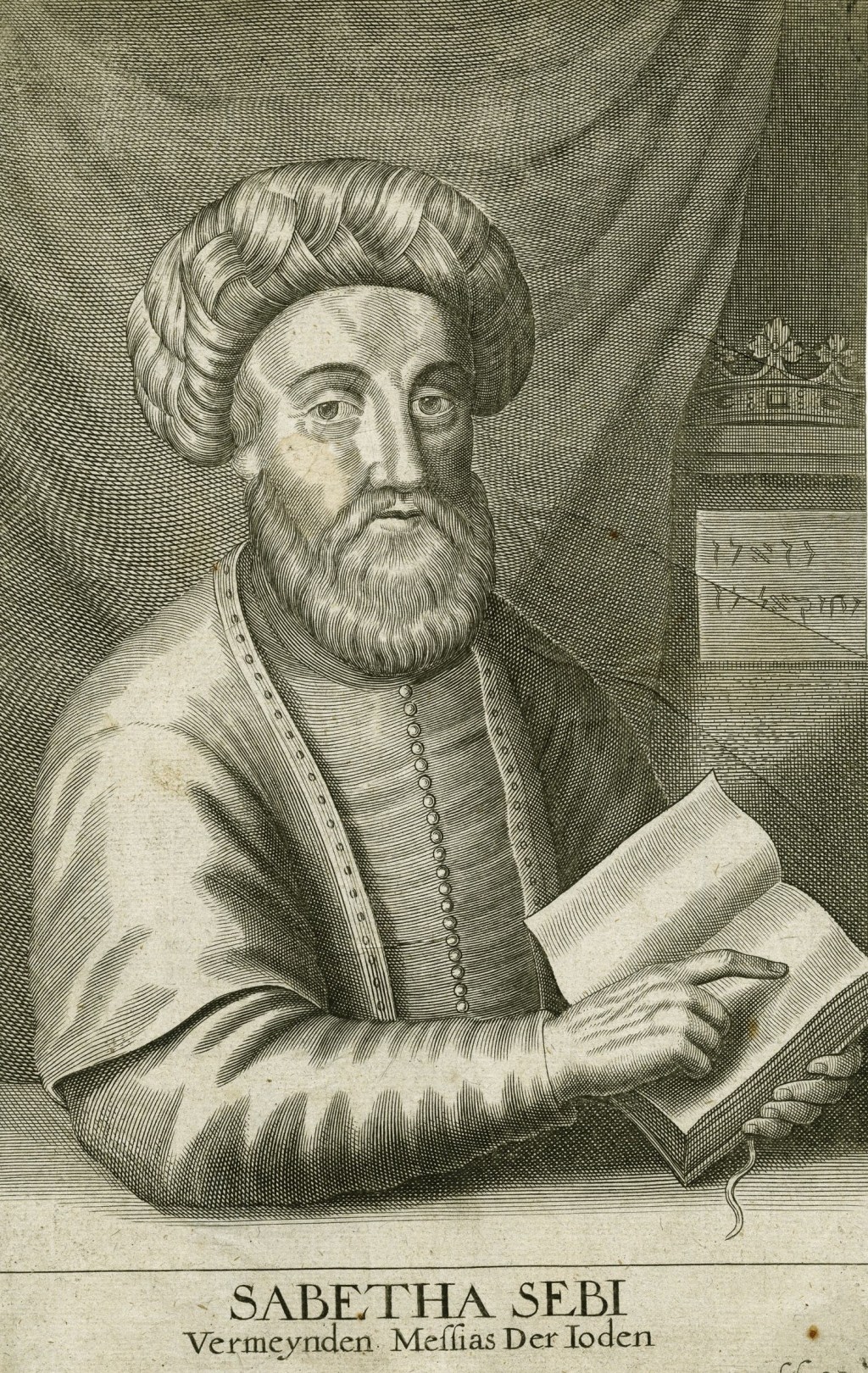
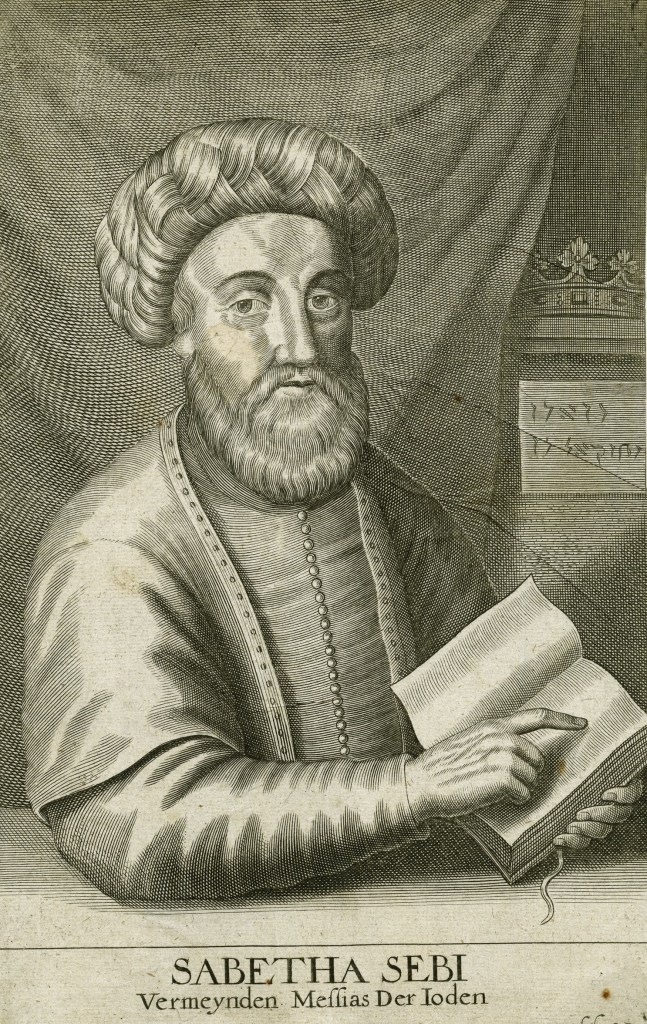
- How will we recognize the messiah and avoid fraudulent claimants to that title? Will the messiah perform miracles, signs, and wonders to establish his (or her or their?) authenticity? Should we expect someone who can call down columns of fire and split the sea (another Moses) or someone humble who studies all day in a yeshivah (someone like, say, a learned rabbi in Brooklyn)? Could someone whose behavior is as … unusual as Shabbetai Tzvi’s be the messiah?
- Will the material world to come, once the messiah is among us and thereafter, simply be a much nicer, less fraught, but not unimaginable version of the reality we know, or will earthly conditions become almost inconceivably different, geopolitically and/or physically, a place where real and metaphoric wolves and lambs dwell together in peace?
- Will the dead be bodily resurrected or only spiritually? Will our understanding of the Torah and Jewish laws be profoundly new (as the Shabbeteans thought)? Will the laws governing the relationship between men and women, and the special requirements and restrictions placed on women, survive intact, or be loosened just a notch, or radically altered?
There are Jewish answers to all these questions (not that I know more than a few of them), but there is not only one accepted Jewish answer to each of these questions.
Gershom Scholem looked at this multitude of expectations and was able to see it through the lens of an analytic structure. Over-simply put (the level at which I understand it), the Jewish expectations about a messiah can be divided into two tendencies: the Utopian and the Restorative.
Utopians expect the messianic age to be or result in a version of a world that has never before been seen by humanity, one that will be the ultimate perfection of the human experience and the cosmos. Utopians are more likely than Restorationists to expect painful, cataclysmic happenings before the new age fully dawns.
For the Restorationists, the messiah will restore the Kingdom of the Children of Israel as depicted in the Bible (or some idealized composite version of that kingdom as it existed in various eras), with a resumption of the priestly services in a reconstructed third temple. Restorationists don’t believe natural laws will change, though human understanding of them may become wiser.
An example of the difference between these two approaches was how, at the height of Shabbetean expectations of a messianic transformation, some believers reportedly sold homes, furniture and other material belongings which would be hard to transport, to converted them into cash or easily carried items to assure their material well being when they relocated to Palestine. That action reflected a practical thing to do if money or assets would be needed in the world to come. Pure utopians may have seen no need for such behavior because, come the messiah, material possessions might become irrelevant. While Restorationists would probably expect to care about material assets in the post-messianic world, they nevertheless might not feel great anxiety about them because they foresee a time of abundance.
Scholem recognized that, naturally, there is some blurring of the boundaries of these theoretical categories. Because the source texts of Jewish messianic prophesies or concepts were not written with Scholem’s dialectic in mind, a single source might contain both utopian and restorative elements. Some utopians may also foresee a new Jewish Kingdom, though it will be far better than old one. Some restorationists might say that they expect the reborn Jewish Kingdom will be a utopian society.
Scholem theorized that the different expectations of the messiah present no difficulty to Judaism—not, that is, until the arrival of a would-be messiah, when the contradictions among these expectations become irreconcilable.
In the end, other than upon the arrival of a messiah, does any of Scholem’s analytic distinction matter? It matters if you are a scholar, or someone who needs a definitive understanding of how to live a life in strict conformity with Jewish law, or at least want to know what to believe when reaffirming daily (in Maimonides’ Principle of Faith, the “Ani Ma’amin”) your faith that the messiah—whom you will await regardless of how long it takes—will come.
But to everyone else, does it matter which of the utopian or restorative concepts are the more “true” (assuming any of these concepts can be considered true)? Might it be more useful for the rest of us to ask what human need is fulfilled by a belief that there will come a day when person will appear as the one anointed to “redeem” humanity (or the part of humanity in which the believer thinks he or she belongs) and put an end to literal or metaphoric exile, slavery, oppression, illness, poverty, despair, or anything else that people perceive as unfair, unjust, or evil?
Perhaps one need served by a belief in a messiah is the longing for an end point to history, meaning an end to human conflict and politics.
Post Script: In this context I note a recent episode of the Ezra Klein’s New York Times podcast (https://www.nytimes.com/2026/05/26/opinion/ezra-klein-podcast-yuvalnoah-harari.html) which featured a discussion with Yuval Noah Harari, a bestselling historian, philosopher, and public intellectual. (Harari’s non-fiction books include Sapiens: A Brief History of Humankind, Homo Deus: A Brief History of Tomorrow, and 21 Lessons for the 21st Century.) The episode is one of a series in which Klein pursues the meaning of liberalism and tries “to think through what exactly in this long tradition [of liberalism] is valuable for us right now” (quote from The Ezra Klein Show, May 5, 2026). By “liberal” and “liberalism,” he means the world view produced by the European Enlightenment, not a point on the political spectrum between left wing and right wing.
In Klein’s conversation with Harari, they discuss the meaning of liberalism. Klein makes the point that liberalism does not expect conflict—people’s and group’s natural differences that constantly arise about beliefs, opinions, government policies, and so forth—ever to be resolved once and for all by a single best or right position.
Harari agrees and goes on to say, “Liberalism does not believe in redemption. You look at religions … you look at secular ideologies like fascism and Communism — they all believe in redemption. They all believe that eventually history will reach a final destination where everything will be perfect. Liberalism does not believe it. There is no redemption, at least not on Earth. There will always be problems and tensions and conflicts.”
Perhaps then, it is at those times when conflicts in human affairs feel the most unresolvable and the risks of disasters (apocalyptic or otherwise) feel worst and least avoidable that the need for a messiah feels most potent.


Leave a Reply