
In Jeyran Main’s review of What Was Forbidden, she wrote, “… it is Yehudit’s arc that gives the novel its emotional weight. Her quiet grief, her refusal to be silenced by the men around her, and her courage to confront the hypocrisy within her own community create a deeply compelling portrait of feminine strength in a patriarchal age.” I think that’s right.
The name Yehudit means “Jewish woman” and evokes the character in the apocryphal Book of Yehudit (which is not part of the Hebrew Bible). In that story, Yehudit’s small city of Bethulia stands between an advancing Assyrian army and Jerusalem. When the hostile force lays siege to Bethulia, the community’s leaders have no plan to break free. The widow Yehudit takes it upon herself to act. She enters the enemy’s camp and gains the confidence of the Assyrian commander Holofernes. Eventually, while sharing a meal with Holofernes, he passes out drunk. Then Yehudit “twice struck his neck with all her might, and she took his head away from him.” (For a translation of the text of the Book of Judith, see the Book of Judith in Sefaria; for commentary see, for example, the article “Judith, Book Of,” in the online Jewish Encyclopedia, 1906 edition.)
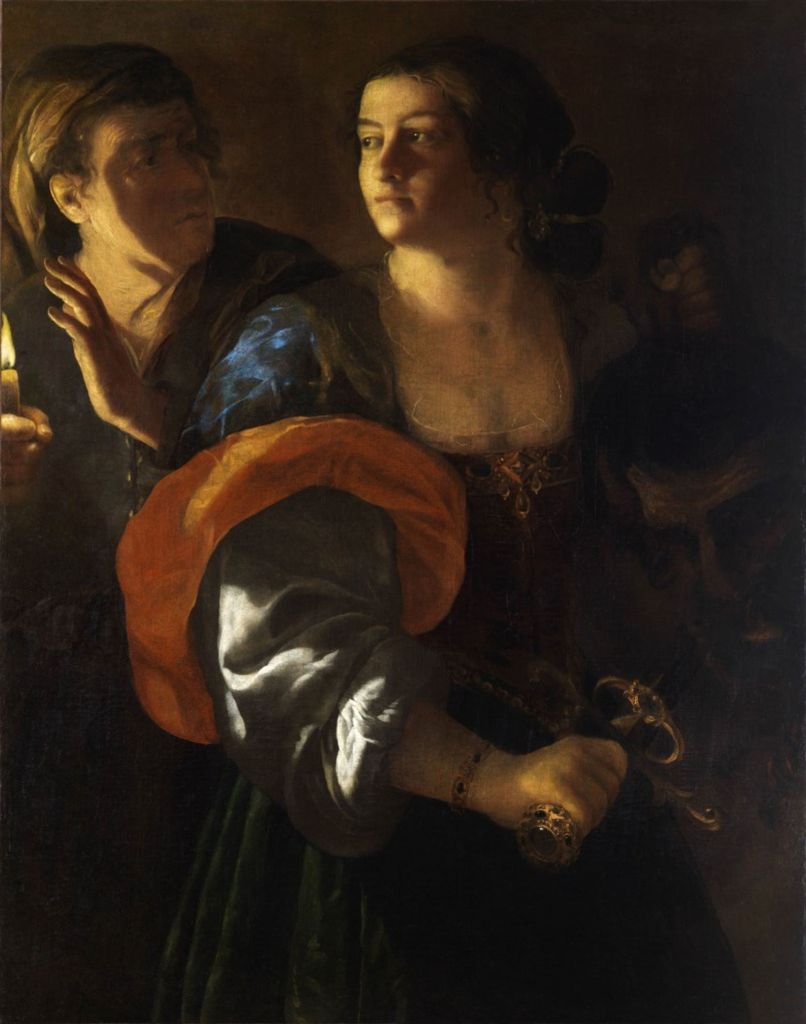
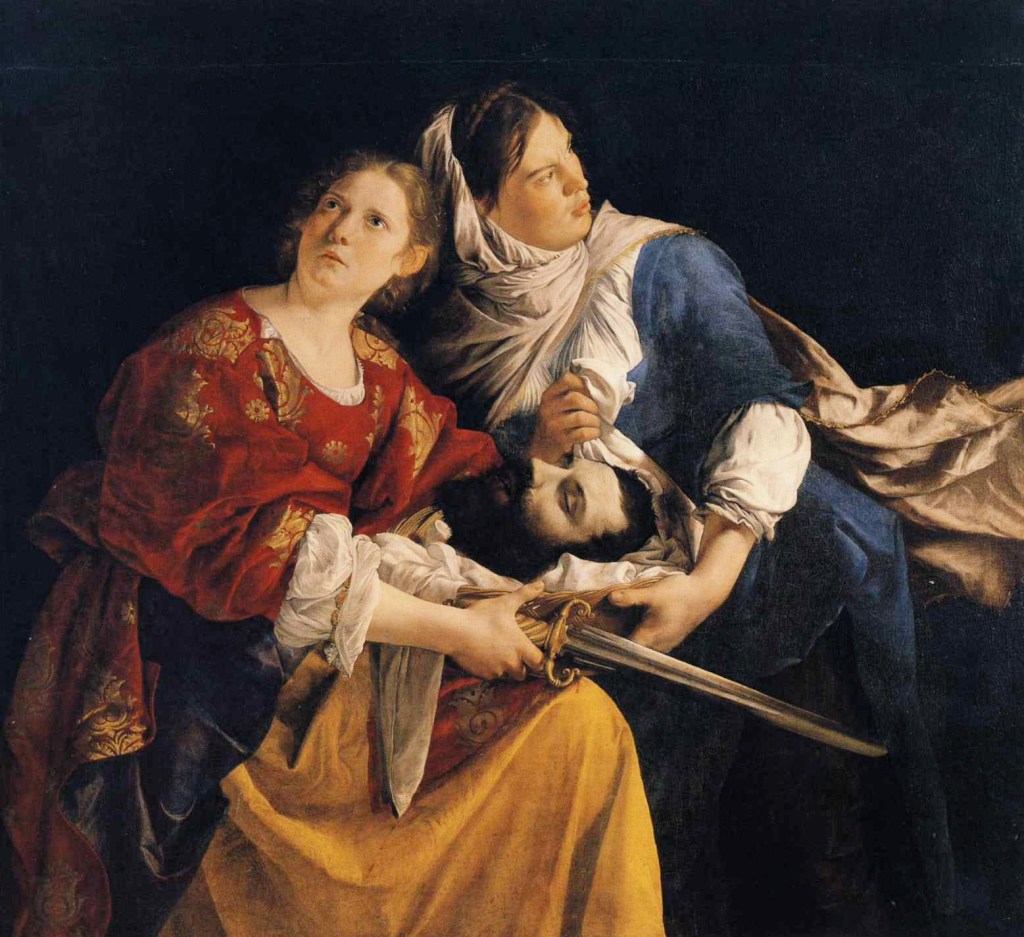
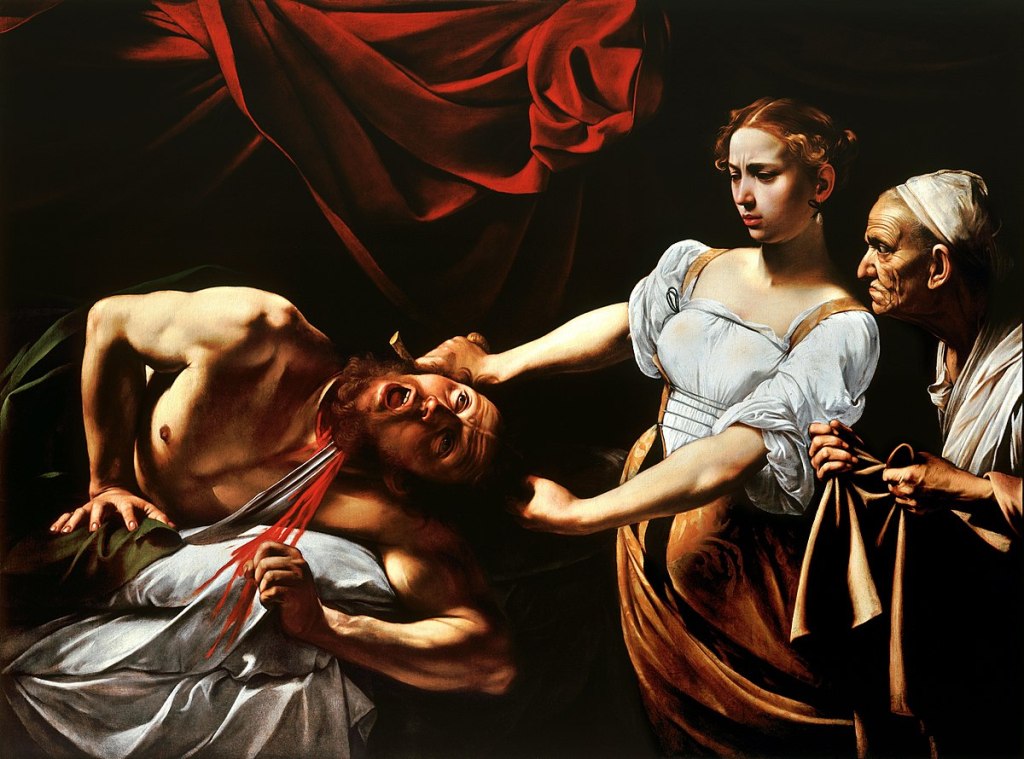
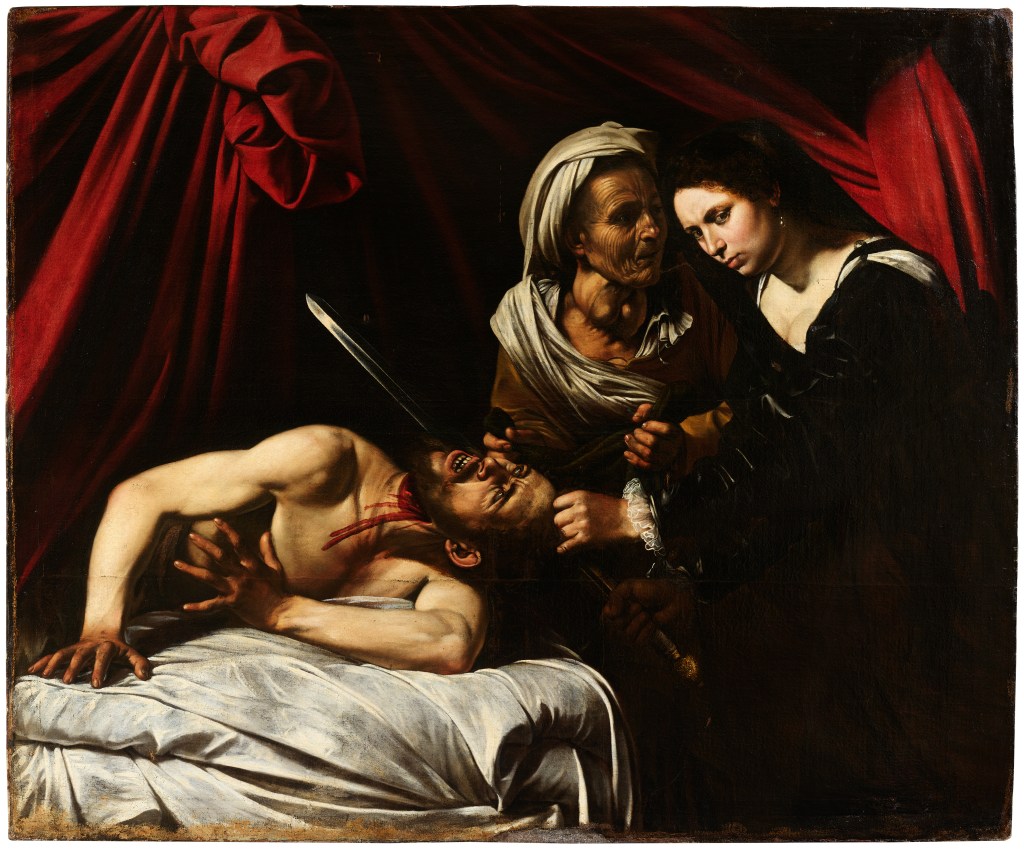
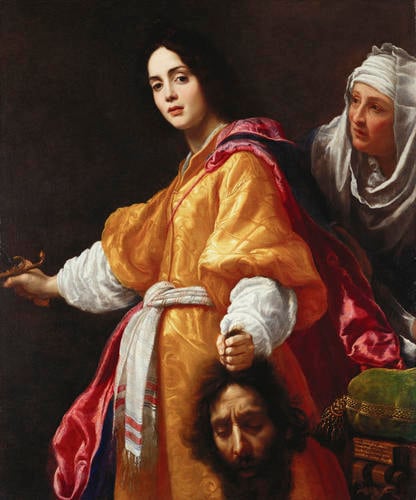
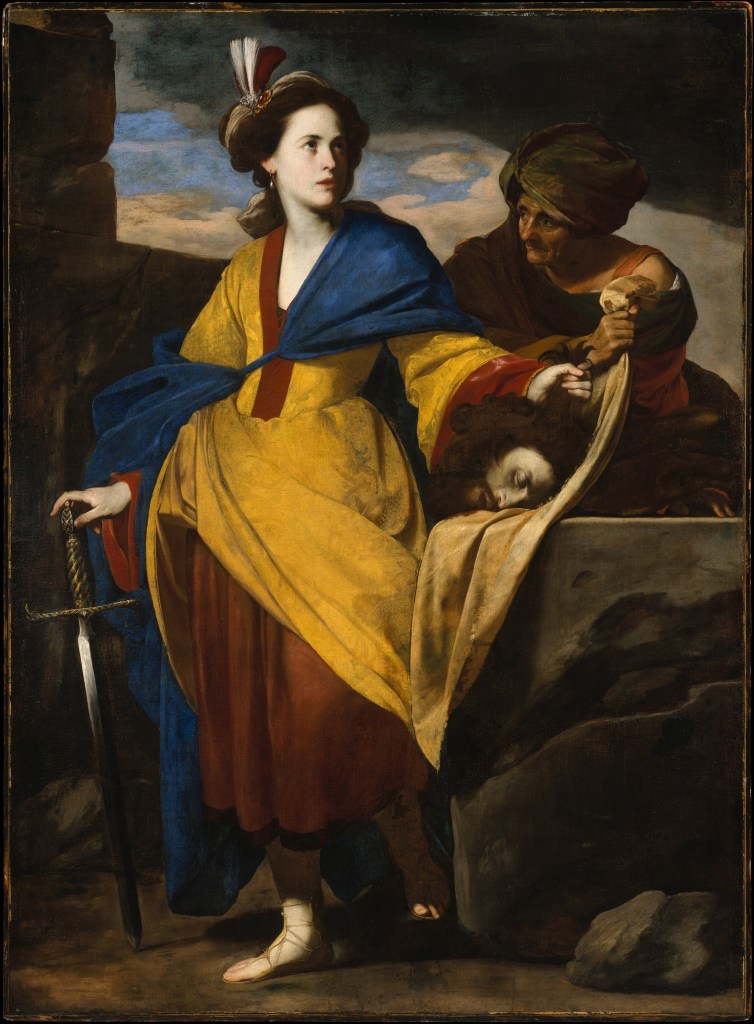
The apocryphal Judith and her deed were the subject of many European artists including, in the Renaissance, Donatello, Botticelli, Michelangelo, Titian, and Baroque painters beginning with Caravaggio. Below are some examples. I think it is safe to say that it was Caravaggio who first depicted the act of beheading, rather than the aftermath (Judith Beheading Holofernes, c. 1598-9). Artimesia Gentileschi created three portrayals of Judith. To my eye, the way Caravaggio’s Judith is standing and her facial expression make her look troubled, as if she disdains the act; her slight form and the way she holds the sword makes me wonder if she could have completed what she set out to do. Contrast that with Artemisia Gentileschi’s Judith Beheading Holofernes (1611 -1612). Gentileschi’s Judith and her servant appear to be acting with determination; Judith (in each of the three paintings by Gentileschi shown below) looks like a woman of some strength. No doubt these differences reflect how the two artists thought of Judith.



 What Was Forbidden
Leave a comment